
Yozgat’ta Madencilerden Maaş Eylemi: 4 Aydır Ücret Alamayan İşçiler İş Bıraktı
10:44Balıkesir İvrindi’deki Altın Madeninde İş Kazası: 2 İşçi Hayatını Kaybetti
10:39Birleşik Kamu-İş'ten Özelleştirme Açıklaması: "Kamu Yararı ve Gelir Kaybı Açısından Karar Yeniden Değerlendirilmeli"
10:34Yeni Orta Vadeli Program (OVP) Açıklandı: Büyüme Tahminleri Düştü, Enflasyon Beklentisi Yükseldi
10:27HAK-İŞ ve İHH'dan Ev İşçileri İçin Saha İş Birliği: Türkiye Genelinde Örgütlenme Seferberliği
10:23Tamira Foods Fabrikasında TİS Anlaşmazlığı: Tekgıda-İş Sendikası Grev Pankartını Astı
10:20Avrupa'nın En Büyüğü Türkiye: Filenin Sultanları Dev Finalde İtalya'yı Devirerek Şampiyon Oldu
10:24Aksa Genel Merkezi Önünde Kitlesel Eylem: Bursagaz İşçilerinden Yetki İtirazı ve İşten Çıkarmalara Tepki
10:18Asgari Ücretlinin Kaybı 6 Bin TL’yi Aştı: İşçi ve Memur Konfederasyonları Ücret Politikalarını Eleştirdi
10:11HAK-İŞ’ten Ankara’da Dev İSG Projesi: "İş Kazalarını Önlemek İçin Zihniyet Değişimi Şart"
In June 2025, at least 164 workers died in Turkey, bringing the first half's work-related fatality count to 961. The report highlighted causes like falls from height, traffic accidents, and Crimean-Congo Hemorrhagic Fever, emphasizing the tragic plight of child, elderly, female, and migrant workers.
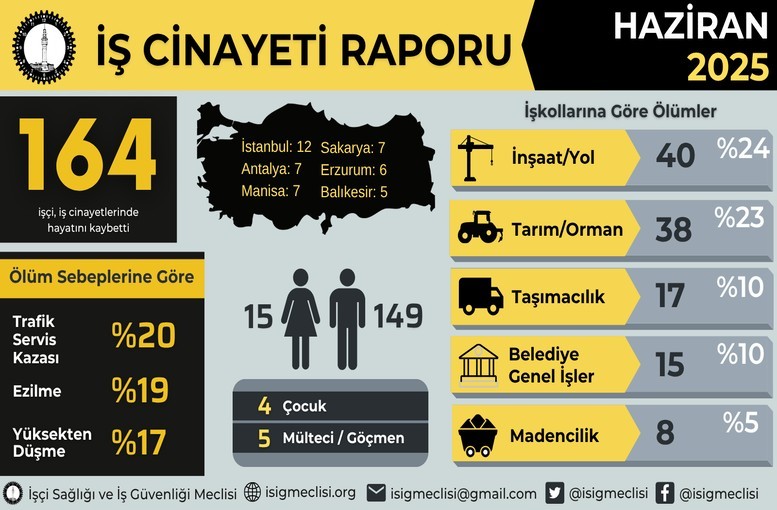
Ankara – Work-related fatalities in Turkey continue to reach alarming levels. According to the June report released by the Workers' Health and Work Safety Assembly (İSİG Assembly), at least 164 workers lost their lives in workplace incidents in June 2025, marking the most tragic cost of labor struggle. This figure brings the total number of worker deaths in the first six months of the year to 961. These tragedies, ranging from falls from height to Crimean-Congo Hemorrhagic Fever, and from deaths due to excessive overwork to traffic accidents, once again highlight the profound problems in occupational health and safety in Turkey.
The sectoral distribution of work-related fatalities in June points to areas with the highest rates of precarious work and lack of oversight. While 47 workers died in manufacturing, 40 in construction, 39 in services, and 38 in agriculture, there were also 17 fatalities in transportation and 15 in municipal/general work. Notably, falls from height in construction, traffic accidents (for truck, bus, taxi drivers, and motorbike couriers), Crimean-Congo Hemorrhagic Fever cases among agricultural workers and livestock breeders, crushing incidents in metal industries, and collapses in mines emerged as leading causes of death. These figures demonstrate how deadly risks specific to certain occupations can be.
Work-related fatalities spread across all corners of Turkey, drawing a grim geographical map of pain. Istanbul led with 12 deaths, followed by Antalya, Manisa, and Sakarya with 7 deaths each. Erzurum recorded 6 fatalities, while Balıkesir, Batman, Diyarbakır, Gaziantep, Hatay, Isparta, İzmir, and Sivas each saw 5 workers lose their lives. With fatalities recorded in 55 cities across Turkey, and 3 workers dying abroad (in Iraq, Italy, and Saudi Arabia, working for Turkish-origin companies or for short-term assignments), work-related deaths have clearly taken on a global dimension.
Examining age groups further accentuates the scale of the tragedy: 1 child aged 14 or younger, and 3 child/young workers aged 15-17 lost their lives. Furthermore, 15 workers aged 65 and over were recorded as elderly worker deaths, either "working because their pension was insufficient" or "unable to retire due to lack of insurance from precarious work." This situation stands as a bitter testament to the economic hardships forcing people to work in life-threatening conditions.
June also brought to light the struggles faced by the most vulnerable groups:
Child Workers: Incidents such as the drowning of 14-year-old Syrian seasonal agricultural worker Davut Bozan in a dam while trying to cool off; 16-year-old farmer Yusuf Akdeniz being crushed under a tractor; 17-year-old seasonal agricultural worker Ahmet Ay falling into an irrigation pool; and 16-year-old vocational school student Turhan Karabulut getting his neck caught in a tractor's hydraulic arm during an internship, vividly showcased the brutal reality of child labor and the conflict between education and work.
Female Workers: In a month where 15 female workers died, notable cases included 57-year-old agricultural worker Naciye Aktaş dying in an electric motorcycle accident; 44-year-old cleaning worker Betül Dilek being electrocuted; and, most tragically, a 28-year-old security guard (M.D.) ending her life by suicide due to burnout caused by unpaid wages, mobbing, and unpaid overtime. These incidents underscore the "invisible labor" and hidden tragedies among female workers, including those working as domestic helpers who fell from heights.
Migrant Workers: Five migrant workers (4 Syrian, 1 Afghan) lost their lives while working in high-risk sectors such as agriculture, food, mining, and construction. This highlights the extreme vulnerability of migrant workers in precarious and dangerous working conditions.
Another striking statistic in the report is that only 1.82% (3 workers) of those who died in work-related incidents were union members, while the remaining 98.18% (161 workers) were non-unionized. This figure once again proved how vital unionization is for occupational health and safety. The İSİG Assembly, with its slogan "Yaşamak İçin Direnİşçi" (Resist, Worker, to Live!), called for the working class to organize, unite, and show solidarity for equality, freedom, brotherhood, and peace, delivering the message: "We must organize to live and to let others live."
The 164 lives lost in June serve as a stark reminder of the urgent steps that need to be taken in the field of workers' rights and working conditions in Turkey.
Source: İSİG meclisi


BİR CEVAP YAZ
E-posta hesabınız yayımlanmayacak. Gerekli alanlar * ile işaretlenmişlerdir